M Mold Damage Restoration Wellington

Wellington water and mold restoration

Water Damage Restoration in Wellington, Florida

Water damage restoration and mold damage restoration for homes, farms and businesses across Wellington and eight nearby Palm Beach County communities. We work from 12841 Meadow Breeze Dr, read moisture before anything comes out, and put the scope in writing. Call (561) 960-0937.

  • Based at 12841 Meadow Breeze Dr, Wellington
  • Palm Beach County coverage
  • Readings recorded before removal
  • Two services, kept separate

A Wellington business built around the reading, not the pitch

Mold Damage Restoration Wellington is a water damage and mold restoration business working from 12841 Meadow Breeze Dr in Wellington, Florida, in Palm Beach County. Wellington is an inland village at the edge of the Everglades, built on drained farmland and known around the world for its equestrian season. The housing here runs from 1970s and 1980s planned-village houses on canal lots to large equestrian estates with barns, tack rooms and guest apartments, plus low-rise condos in the 55-plus communities to the east.

The work is deliberately narrow. Water damage restoration covers water removal, water extraction, storm damage and water leak detection, and those four sit inside this one service rather than being sold as separate pages. Mold damage restoration covers containment, removal of material that has supported growth, and correction of the moisture that allowed it. Keeping the scopes separate is what stops a job from turning into an open-ended promise.

  • A moisture assessment before any removal is proposed
  • A written scope that separates drying from permanent repair
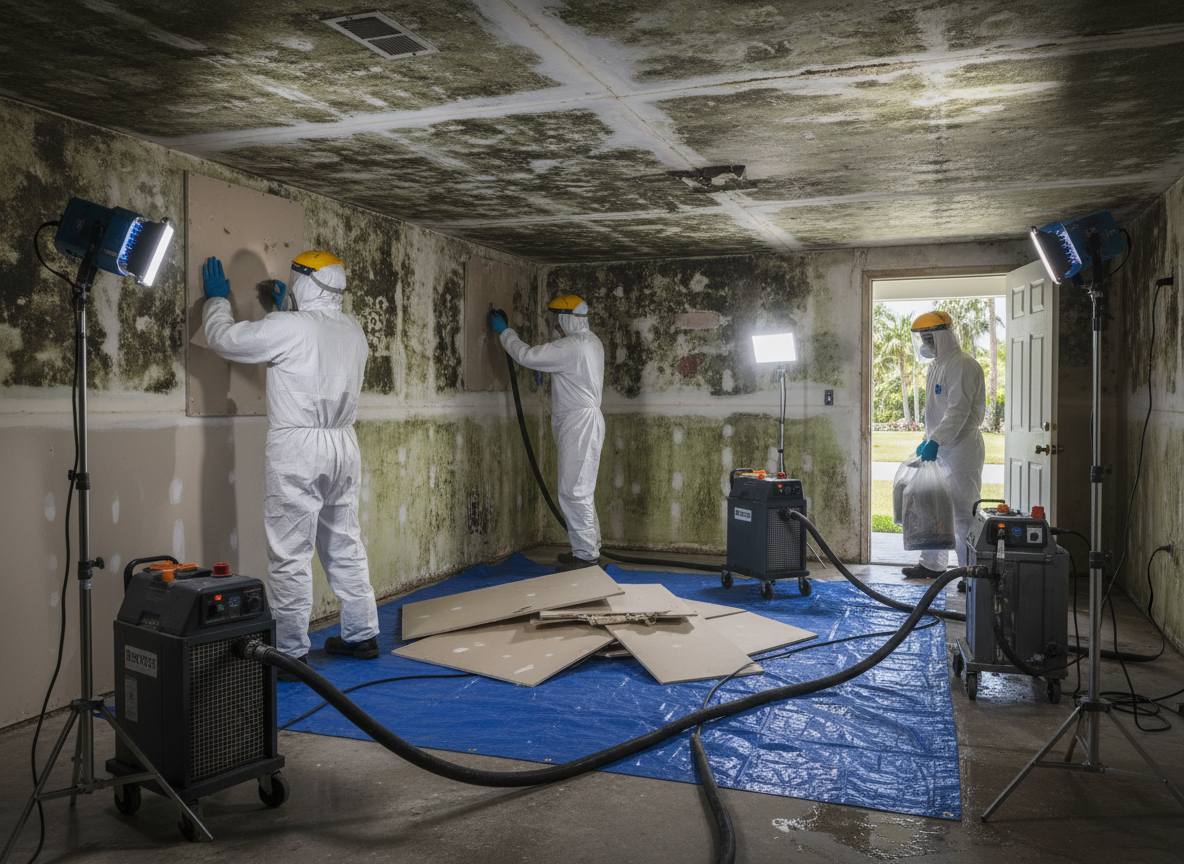
  • Containment and air filtration where growth is disturbed
  • Photographs and readings kept in sequence
  • A named hand-off when the repair belongs to another trade
  • Only the facts this business has supplied
More about us
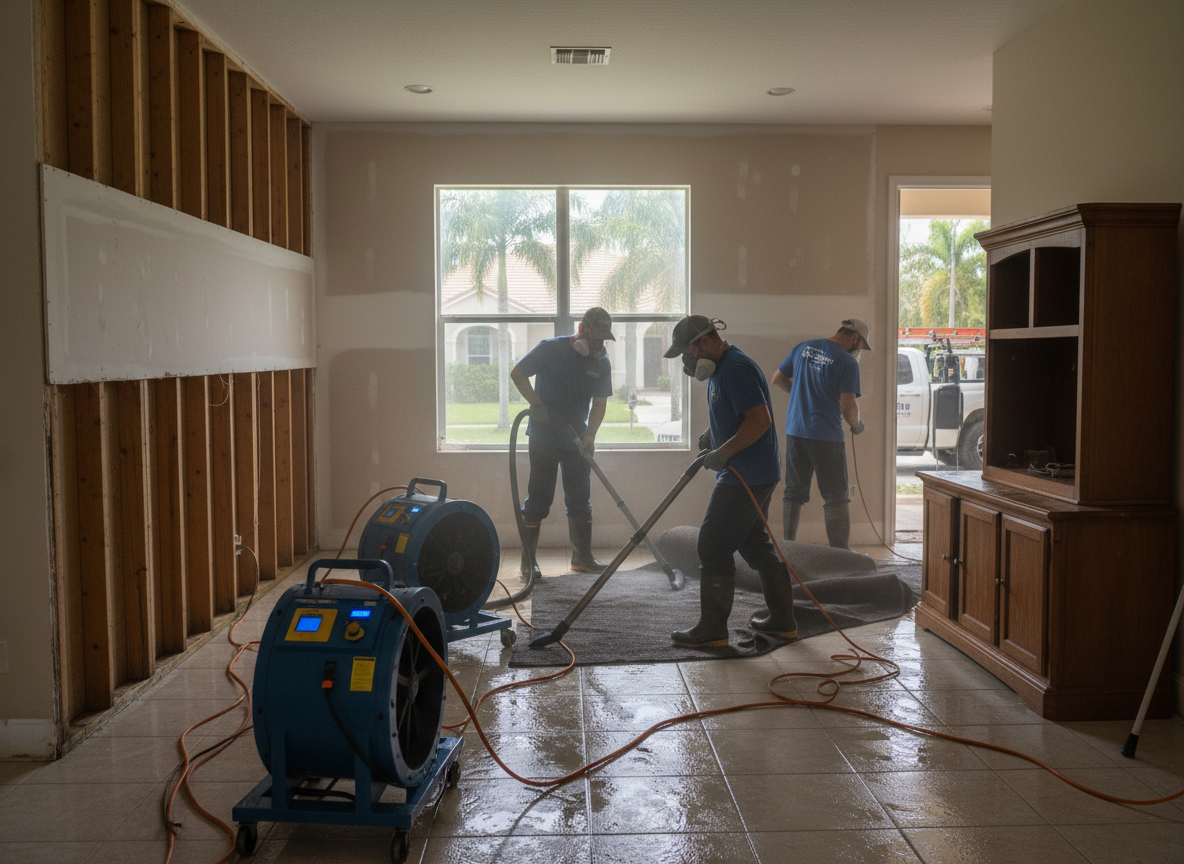
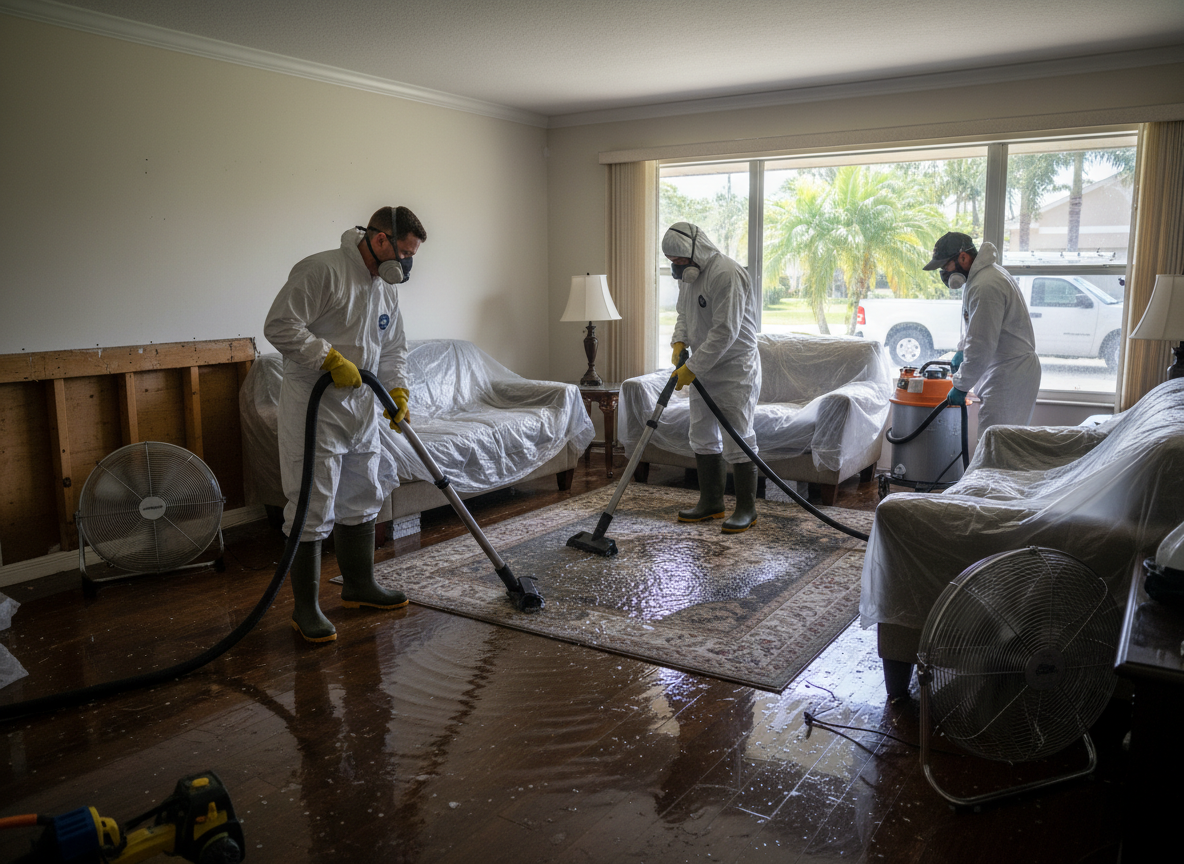
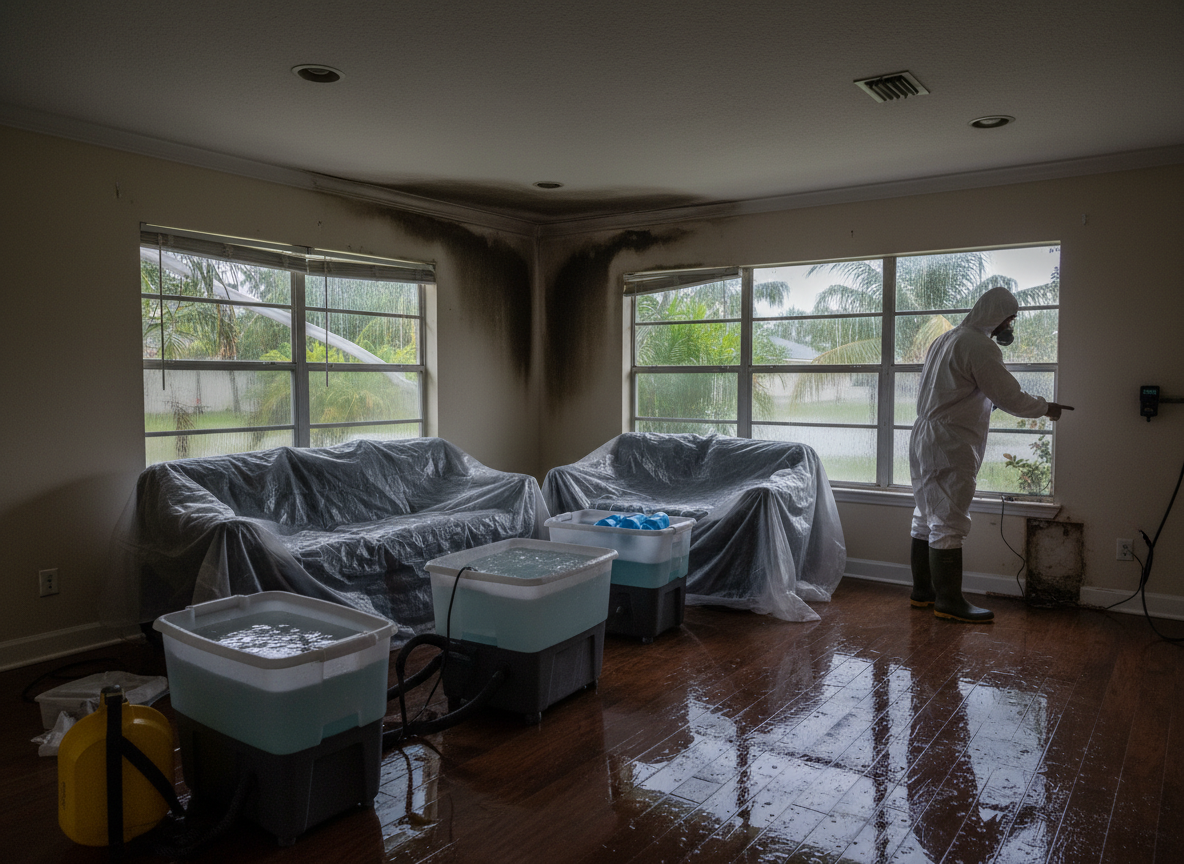
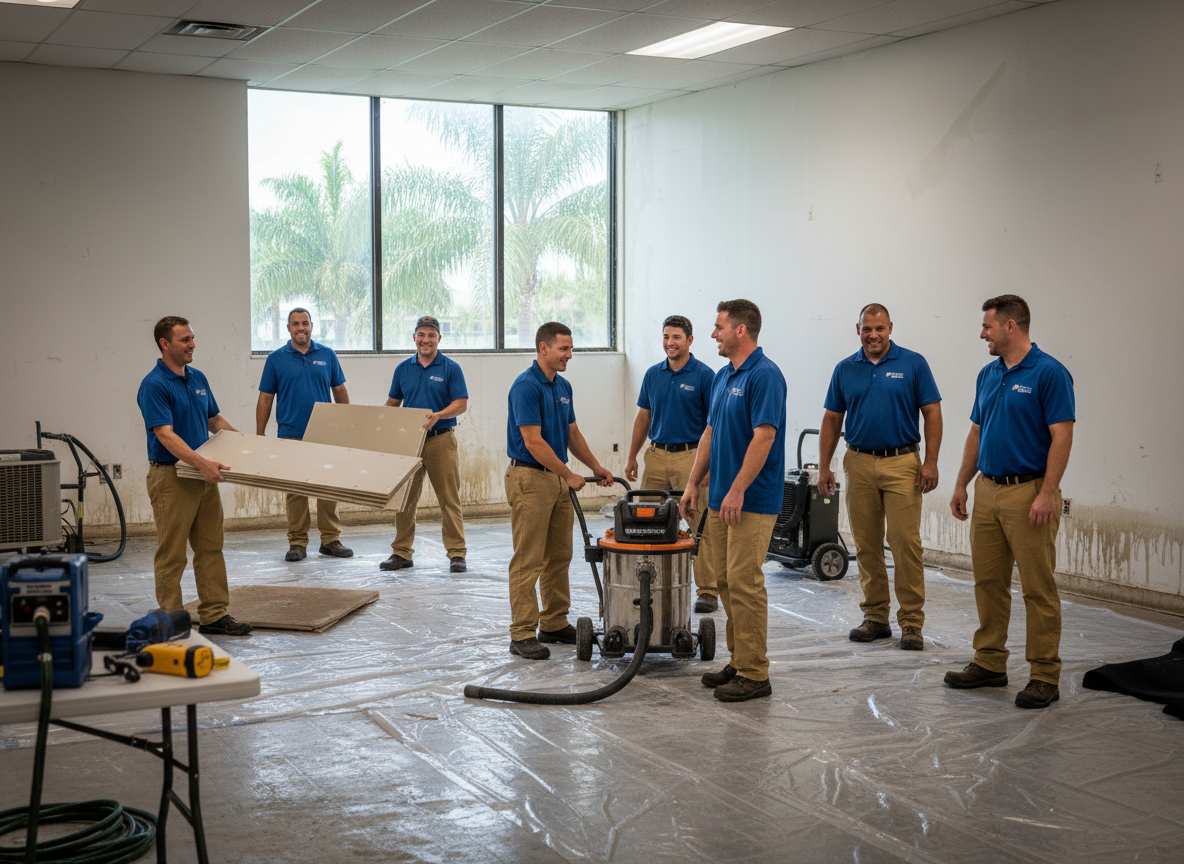
The Mold Damage Restoration Wellington team at work in Wellington

How it works

What to expect, start to finish

1

Call and safety guidance

Describe what is wet, where it came from and whether water is still running. We tell you what to shut off and which rooms to keep clear before anyone arrives.

2

Read the building and write the scope

We read moisture with meters and thermal imaging, mark the wet boundary and confirm whether the source is still active. The scope names removal, drying and any repair that belongs elsewhere.

3

Remove water and saturated material

Standing water comes out first, then water held in carpet, pad, cabinet bases and insulation. Material that cannot be saved is removed, bagged and disposed of.

4

Dry against readings

Air movers and dehumidifiers run at the marked points until the assembly reaches a dry standard. Readings are recorded at each visit rather than assumed.

5

Verify and hand back

Final readings are compared with day one, room by room. You get the record of what was found, removed and read, plus the name of any trade that owns the next repair.

Why Choose Us

Nothing here is a badge we bought. The difference is the sequence: find the source, read the moisture, contain the work, dry to a number, and say plainly which repair belongs to another trade.

The source is found before equipment is set

A supply line, a condensate drain, a door track, a roof opening and a canal that backed up all leave different evidence. We identify which one is responsible before an air mover runs, because drying a room without correcting the source only moves the problem to the next rain.

Readings at marked points

Each reading point is marked by room and location, photographed and written down. Drying ends when the material reaches a dry standard, not when a surface feels dry to the hand.

A written scope before work starts

The scope separates emergency water work from permanent repair. It names what is being removed, what is being dried and what sits outside our trade, so you can see where our work starts and stops.

Wellington buildings read as they are

Block and stucco on slab, a 1980s canal-lot house, a barn with its own water service and a low-rise condo in a 55-plus community all hold water differently. We read the assembly in front of us rather than applying one method to every address.

Two services, no blurred edges

Water damage restoration and mold damage restoration are separate services with separate steps. Water removal, water extraction, storm damage and water leak detection sit inside the first. Nothing is padded to sound bigger.

An honest hand-off

A failed supply line belongs to a plumber, a roof opening to a roofer, a condensate line to an HVAC contractor and a structural rebuild to a general contractor. We identify the component and name the trade that owns the repair instead of stretching our description.

Access asked about on the first call

Gated villages, barns set back from the road, horse trailers in the drive and condo buildings with shared corridors all change how a job is set up. We ask about gates, animals, parking and association rules before the visit, so the assessment is not spent waiting at an entrance.

Inland humidity is part of the job

Wellington is not on the coast, but the air is still warm and heavy for most of the year, and air conditioning keeps interior surfaces cool enough to condense moisture. A surface can read dry while the cavity behind it stays wet, so we check the air and the assembly, not just the floor.

Mold Damage Restoration Wellington — water damage restoration in Wellington

Good to know

Water Damage Restoration Questions — Wellington, FL

Still have questions? Call (561) 960-0937 and we will talk it through.

(561) 960-0937
+ What should I do in the first hour after water gets into my Wellington home?
Stop the water at the fixture or the main shutoff if you can reach it safely. Keep people out of rooms with standing water, wet ceilings or water near outlets and panels, and do not run a household vacuum in standing water. Photograph what you can before you move anything. Then call (561) 960-0937 and describe the source, the rooms affected and whether the water is clean, cloudy or came in from outside. Those details decide what equipment comes out and what material may have to be removed.
+ How fast does mold grow in Wellington humidity?
Mold needs moisture, organic material and time, and inland Palm Beach County supplies the first two for most of the year. Growth can begin in about a day or two on a damp surface, and a closed house with the air conditioning off can support it faster. The response is to stop the source and dry the material, not to wait for a visible patch. A musty smell in one room is reason enough to read the wall base and the cabinet floors.
+ My Wellington house backs onto a canal. Is canal water different from rain water?
Yes. Rain that enters at a door track or a window is usually a clean-water loss, and more material can be dried in place. Canal water is surface water: it can carry sediment, lawn chemicals and whatever else the canal has picked up, so material that took it is usually assessed as contaminated and removed rather than dried. The two need different scopes even when the same room is wet.
+ Wellington has an extensive drainage system. Does that keep water out of a house?
The Acme Improvement District maintains roughly 86 miles of canals, about 978 acres of lakes and eight pump stations across its service area, and that system moves storm water away from streets and lots. It does not make an individual house waterproof. Wellington is flat and the water table is high, so in a heavy storm the ground can be saturated while the canals are full, and water finds the lowest opening: a door threshold, a garage slab, a lanai or a wall base.
+ Do you work on horse properties with barns and tack rooms?
Yes. A Wellington equestrian property often has more than one water service and more than one building: a house, a barn, a tack room, a feed room, wash racks and sometimes a guest apartment over the barn. A leak in a wash rack or a feed-room line can run for days before anyone notices, and a tack room holds leather and feed that should not stay damp. We ask which buildings are on which shutoff before the visit.
+ Will my insurance cover the work?
That depends on your policy and on the cause, and we do not speak for your insurer. What we can do is document the loss: the readings, the photographs, the material removed and a moisture map by room. Sudden plumbing failures and storm entry are usually treated differently from long-term seepage, so the record matters when a claim is reviewed.
+ Can a wall be dried without removing the drywall?
Sometimes. If the water was clean, the cavity is accessible and readings show the assembly drying, the wall can often stay. If the drywall has softened, the cavity is holding water or the water was contaminated, removal is usually the faster and safer route. The readings and the water category decide it, not a fixed rule applied to every room.
+ Do you work in condos and 55-plus communities?
Yes. Golden Lakes and the other condo and villa communities to the east have shared walls, shared corridors and association rules. We ask about building access, service elevators, protection for common areas and work-hour limits before the visit. If the source is a common-element line or a riser, the association is involved, and the boundary between unit and common element has to be documented before anyone opens a wall.
+ Which areas do you cover?
Wellington and eight communities within about ten miles, all in Palm Beach County: Loxahatchee, Loxahatchee Groves, Royal Palm Beach, Golden Lakes, Lake Belvedere Estates, Royal Palm Estates, Greenacres and The Acreage. Each area page explains the housing and water pattern we see there. If your address is outside that list, call and we will tell you honestly whether it is a sensible fit.
+ Can you work alongside my plumber or roofer?
Yes. A water loss often has more than one cause and more than one trade. If a supply line failed, the plumber repairs the pipe while we remove the water and dry the assembly. If a roof opening let the rain in, the roofer closes the opening and we deal with what is wet inside. Tell us who else is involved on the first call. We will name where our part starts and stops in the written scope, and we will coordinate the sequence so drying is not waiting on a repair that has not happened yet.
+ What should I do with wet furniture, rugs and documents?
Move what can be moved without lifting anything that is heavy, soaked or attached, and get rugs, cushions and paper off the wet floor. Photograph each item where it was before you move it. Porous items that have been wet for more than a day or two, such as carpet pad, upholstery foam and cardboard, are usually not worth saving and can keep a room humid after the water is gone. Paper documents can often be stabilised if they are separated and air-dried quickly, but the priority is the building: a wet floor assembly will keep feeding moisture back into everything stored on it.
+ Do I need to move out while the work is done?
Often not for the whole job, but it depends on the area affected and what is being removed. A single room with containment can usually be isolated while the rest of the house stays usable. If the water reached a kitchen, a bathroom, a bedroom or the air-handling area, or if material removal will generate dust, we will say which rooms should be closed and for how long. We do not decide for you whether to stay; we give you the facts about access, noise, power use and containment so the decision is yours.
+ How do I document a loss for my insurer?
Photograph the water before anything is moved, note the date and time you first saw it, and keep a list of what is wet. Do not throw away removed material until you have been told it can go. We record readings at marked points before and after drying, take photographs and keep a moisture map, so the record shows what was found rather than what was remembered later. We do not adjust claims or decide coverage.
+ Do you cover rental properties and businesses?
Yes. A rented house, a condo unit, a shop or an office is scoped the same way as an owner-occupied home, with one addition: the lease or the building manager decides access and who authorises work. We ask who can approve the job before the visit so the assessment is not held up at the door. For a business, we also ask which areas have to stay open and where equipment can run without blocking a customer route.
+ What does a dry standard actually mean?
A dry standard is a target reading for a specific material, not a feeling. Drywall, framing timber, cabinet board and concrete all hold and release moisture differently, and each has a range that is considered normal for its material and the conditions around it. We take a baseline in an unaffected part of the same building, then dry the wet assembly until the readings return to that range. That is why drying stops on a measurement rather than on a date. It also explains why a surface that feels dry to the hand can still be wet inside the wall.
+ What if the water came from a neighbour or from outside?
Tell us on the call. Water from an adjoining unit, a shared roof, a swale or a canal is a different job from a failed supply line, and the fix may belong to a neighbour, an association, the city or the drainage district. We can read and dry your side of the boundary and record what we see, but we do not decide who pays for the cause. Naming the right party early is often what stops the same water from returning in the next storm.

Need water damage or mold restoration in Wellington, FL?

Call (561) 960-0937 and tell us what is wet, where it came from and whether the source is still running.

Call now Request service